
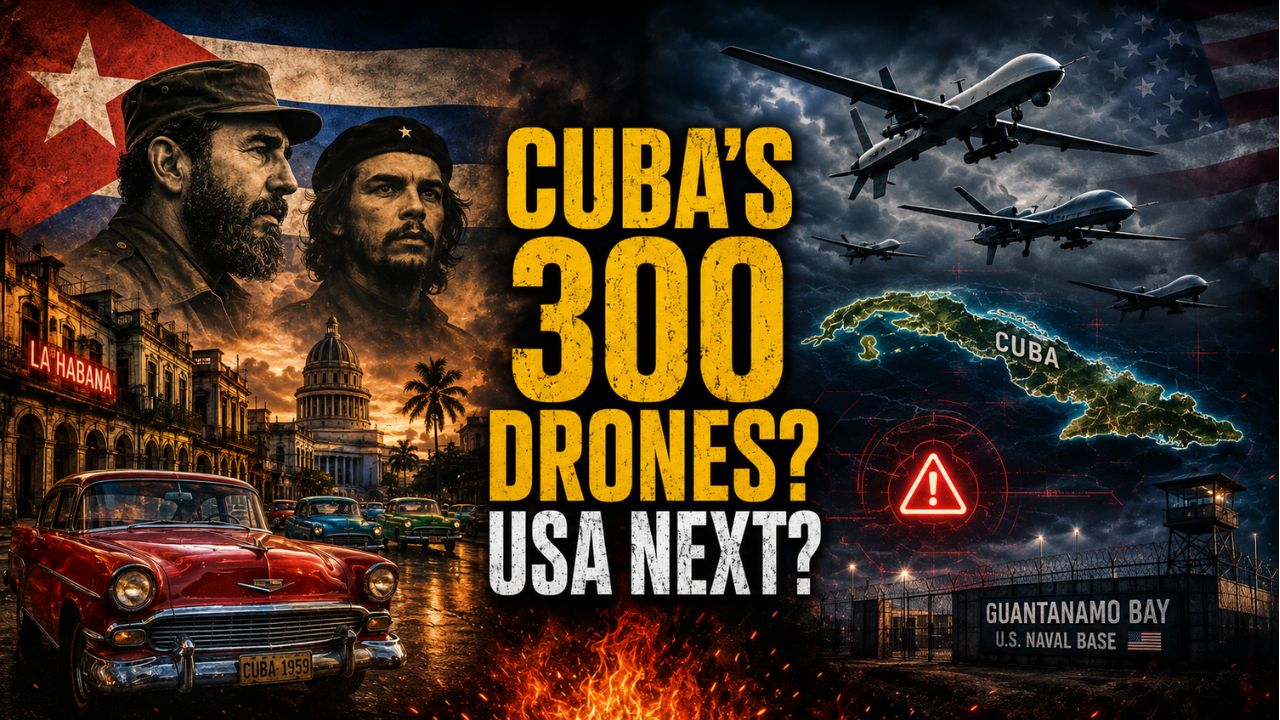
The most interesting and controversial country at the moment is Cuba. From communist revolution to Cold War tensions and from American sanction and military fear, Cuba has always been the headline in world news. Recently, a new report claimed that Cuba has developed around 300 military drones with the help of Russia and Iran. This news has once again increased tensions between Cuba and the United States. To understand why this report is important, we first need to understand Cuba’s history, its relationship with America, and the rise of leaders like Fidel Castro and Che Guevara.
Where is Cuba?
Cuba is a small island country located very close to the United States.
Nearby countries include:
- The United States in the north
- Mexico in the west
- The Bahamas in the northeast
Its capital city is Havana.
Cuba is famous for:
- Sugar production
- Old vintage cars
- Beaches and tourism
- Communist government
- Fidel Castro and the Cuban Revolution
How Christopher Columbus Changed Cuba
Before European arrival, Cuba was home to indigenous tribes of the Taíno and Ciboney people. Everything changed in 1492 when Christopher Columbus arrived during his expedition funded by Spain. Unlike the many European explorers of that time, Columbus was searching for a sea route to India but accidentally reached the Americas. Soon after, that Spain took control of Cuba around 1508.
Spanish Rule and Sugar Economy
For almost 400 years, Spain ruled Cuba. The Spanish realized that Cuba’s climate was perfect for sugar farming. Huge sugar plantations were created, and enslaved Africans were brought to work in the fields. Cuba slowly became one of the world’s biggest sugar-producing regions, often called the “Sugar Capital of the World.” But the local population suffered heavily under colonial rule.
America Enters Cuba
In 1776, United States became independent from Britain and then began to expand its influence into its neighboring countries. By 1898, the US fought a war against Spain known as the Spanish-American War. America defected the Spanish and remove them from the Cuba. However, instead of complete freedom, Cuba came under strong American influence. From 1898 onward, the US controlled many political and economic activities in Cuba.
Batista’s Dictatorship
The United States supported a leader named Fulgencio Batista, who became Cuba’s ruler. Batista ruled for many years with strong American backing.
During his rule:
- Corruption increased
- Political opposition was crushed
- America gained major business benefits in Cuba
The US also gained control of Guantanamo Bay, which later became one of America’s biggest naval bases. Even today, Guantanamo Bay remains under US control.
Rise of Fidel Castro and Che Guevara
Many Cubans were unhappy with Batista’s dictatorship. A young lawyer named Fidel Castro, along with his brother Raul Castro and revolutionary Che Guevara, started a rebellion against the government. Using guerrilla warfare, they attacked government forces and slowly gained public support. Finally, in 1959, Batista fled Cuba, and Fidel Castro came to power. This event became famous as the Cuban Revolution.
Why America Was Afraid of Cuba
America became extremely worried after Fidel Castro took power because Cuba was now becoming a communist country very close to the US border. At that time, the Cold War between the United States and the Soviet Union was already happening. The Soviet Union started helping Cuba with money, weapons, and political support. America feared that communism was spreading near its territory.
Bay of Pigs Invasion
In 1961, the US tried to overthrow Fidel Castro through a failed operation called the Bay of Pigs invasion. America trained Cuban exiles and sent them to attack Cuba. But Castro’s forces defeated them quickly. This became one of America’s biggest failures during the Cold War.
Cuban Missile Crisis
The situation became even more dangerous in 1962 during the Cuban Missile Crisis. The Soviet Union secretly placed nuclear missiles in Cuba to protect it from possible American invasion. For 13 days, the world came close to nuclear war between the US and the Soviet Union. Finally, both sides stepped back, and the crisis ended peacefully. But this event showed how important Cuba was in global politics.
Cuba’s Economic Problems
Although Fidel Castro remained in power for decades, Cuba faced serious economic problems. America imposed heavy sanctions on Cuba, limiting trade and business opportunities.
Today, Cuba faces:
- Poverty
- Shortage of goods
- Weak economy
- Old infrastructure
- Limited private business
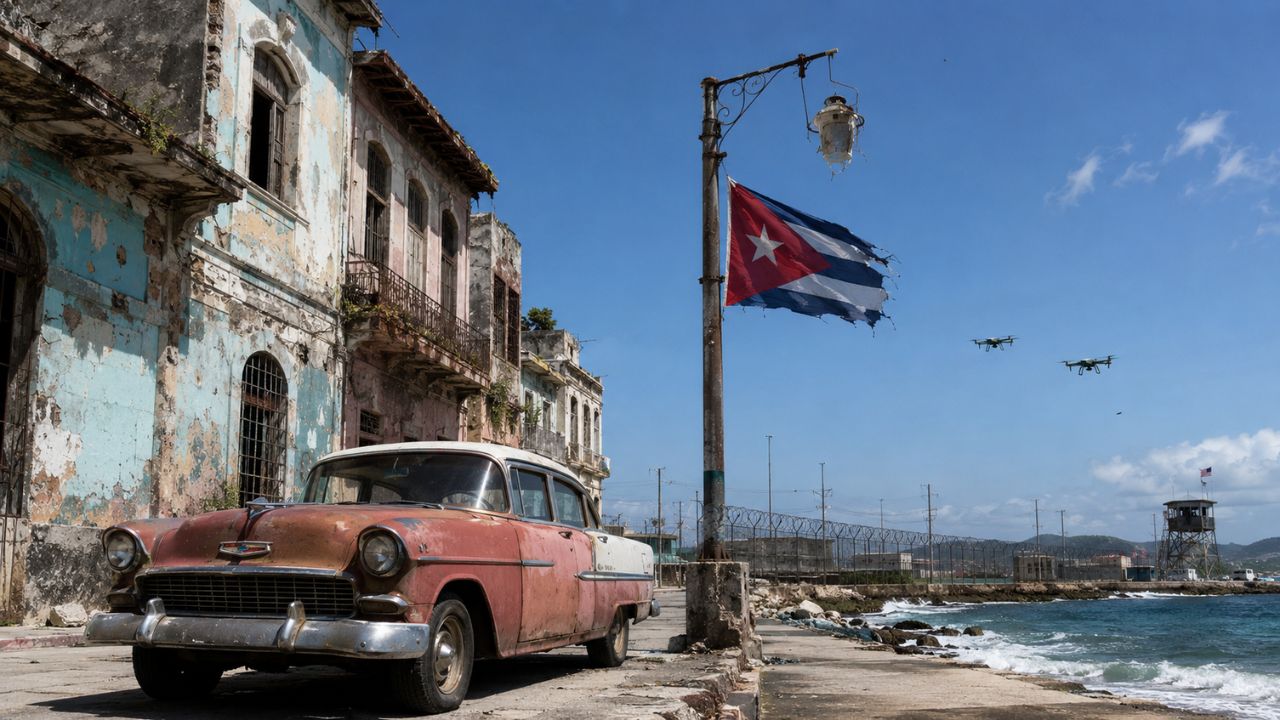
Many people still drive vintage cars from the 1960s and 70s because newer vehicles are expensive. For many years, Cubans were not even allowed to freely run private businesses.
Tourism and Daily Life
Despite economic struggles, Cuba remains popular among tourists.
Tourists often visit for:
- Beaches
- Music and culture
- Classic cars
- Historical buildings
Tourism is very important for Cuba’s economy. However, many parts of Havana remain underdeveloped and poorly maintained.
The New Drone Report
Recently, reports claimed that Cuba has developed around 300 military drones with support from Russia and Iran. This has shocked many people because Cuba is located very close to America. Some experts believe these drones could threaten US military operations, especially near Guantanamo Bay. However, there is currently no public evidence that Cuba is planning an attack on America. No major military mobilization or missile deployment has been confirmed.
Why the Report Matters
Many analysts believe the report may increase tensions between America and Cuba. Former US President Donald Trump has often taken a tough stance against Cuba. Some people think America may use such reports to justify stronger actions or sanctions against Cuba in the future. At the same time, Cuba continues to maintain close relations with Russia and Iran.
Final Thoughts
Cuba’s history is full of revolution, foreign control, Cold War conflict, and economic struggle. From Spanish colonial rule to Fidel Castro’s communist revolution, Cuba has remained one of the world’s most politically important islands. Today, the country still faces economic hardship and international pressure. The new drone report has once again placed Cuba in the global spotlight. Whether this situation becomes a serious conflict or only political tension will depend on future relations between Cuba, America, Russia, and Iran.