
Introduction
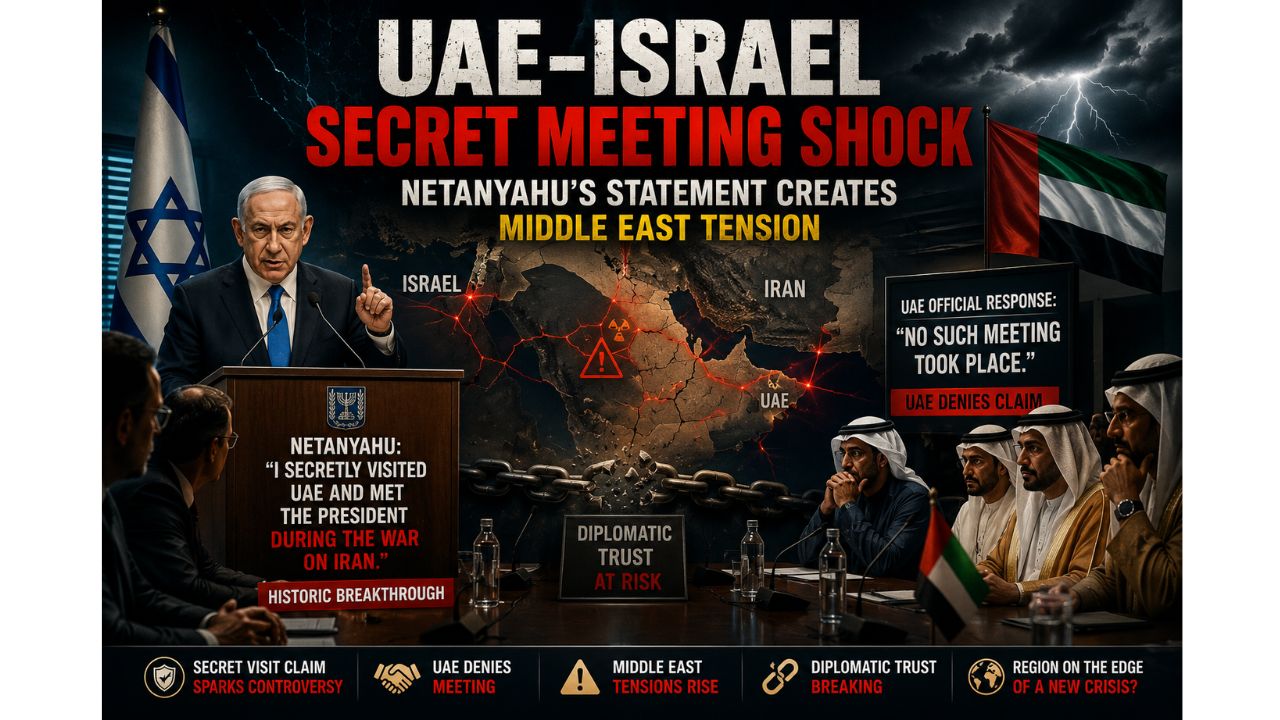
A major political controversy has erupted in the Middle East after Israeli Prime Minister Benjamin Netanyahu publicly revealed that he had secretly visited the United Arab Emirates during the Iran conflict and met UAE President Mohamed bin Zayed Al Nahyan.
The timing of this revelation surprised the world because former U.S. President Donald Trump was reportedly involved in diplomatic discussions regarding tensions with Iran and regional peace efforts.
Soon after Netanyahu’s statement, the UAE officially denied that any such meeting had taken place. This contradiction created confusion and raised many questions about the hidden relationships and strategic alliances in the Middle East.
Netanyahu’s “Secret Visit” Statement
According to a statement shared from Netanyahu’s official office, he claimed that during military operations against Iran, he secretly visited the UAE and held discussions with President Sheikh Mohamed bin Zayed.
The statement described the visit as a “historic breakthrough” in relations between Israel and the UAE. However, many observers questioned why Netanyahu would publicly reveal a meeting that was supposedly secret.
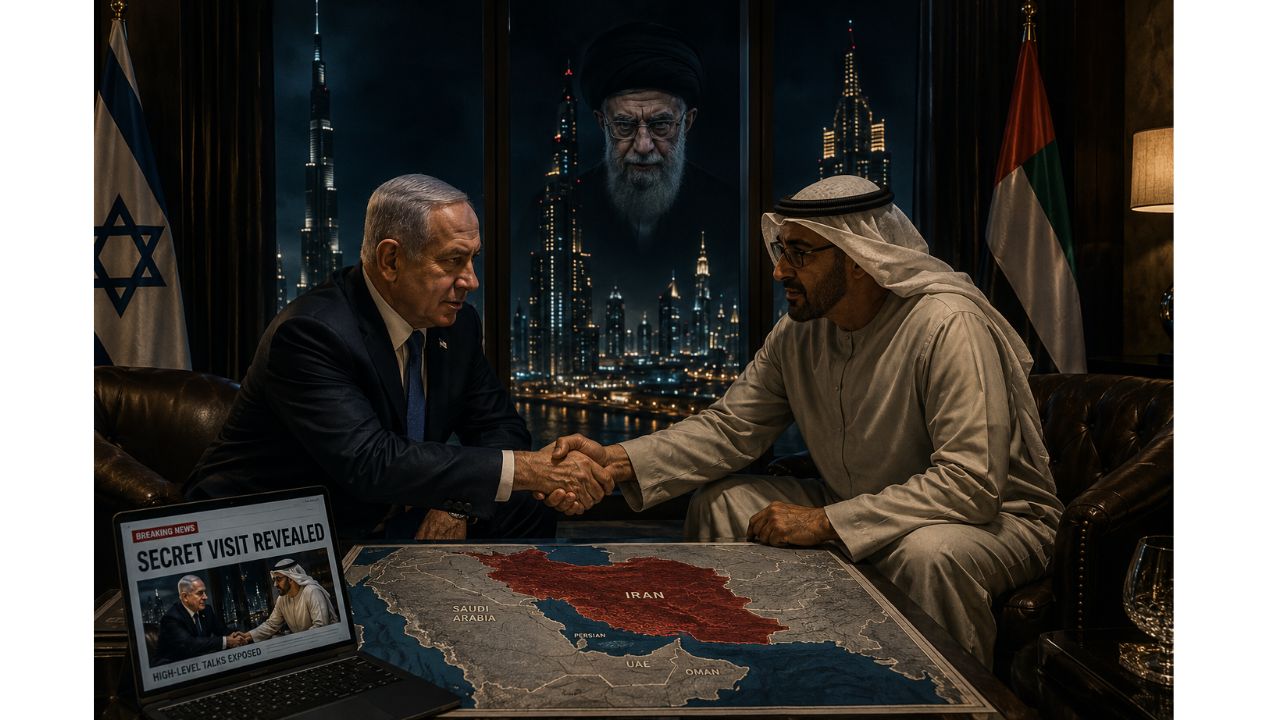
Political analysts believe this announcement was not accidental. Instead, it may have been a strategic message directed toward Iran, the United States, and the Arab world.
UAE’s Immediate Denial
After Netanyahu’s statement became public, the UAE quickly denied that any official meeting had occurred.
This created an unusual diplomatic situation:
- Israel claimed the meeting happened.
- UAE officials denied it completely.
The UAE’s reaction suggests that the country is trying to avoid political backlash from the Muslim world. Many Gulf countries and Islamic organizations still strongly support Palestine and remain uncomfortable with close public relations with Israel.
The UAE is in a difficult position because it has developed strategic ties with Israel while also trying to maintain stable relations with neighboring Arab countries and Iran.
Why This Issue Matters
The controversy is important because it reveals how sensitive Middle Eastern politics has become after recent conflicts involving Iran and Israel.
Reports suggest that during the Iran-Israel conflict:
- UAE faced heavy drone and missile threats.
- Investors became nervous.
- Tourism and financial markets were affected.
- Oil and trade routes in the Gulf region came under pressure.
Some reports also claimed that Israel helped defend the UAE using advanced defense systems such as:
- Iron Dome
- Iron Beam
These are highly advanced Israeli air defense systems designed to intercept missiles and drones.
If these reports are true, it would mean Israel played a direct role in protecting the UAE during attacks connected to Iran.
The Growing UAE–Israel Relationship
Relations between the UAE and Israel were historically hostile because most Arab nations supported Palestine against Israel.
However, things started changing over the last decade.
Abraham Accords
In 2020, under the leadership of Donald Trump, the famous Abraham Accords were signed. These agreements normalized diplomatic relations between Israel and several Arab countries, including:
- UAE
- Bahrain
- Morocco
- Sudan
This was considered one of the biggest diplomatic shifts in modern Middle Eastern history.
After the agreement:
- Israel and UAE opened embassies.
- Trade increased rapidly.
- Defense cooperation expanded.
- Technology and intelligence sharing improved.
The relationship became especially strong in:
- Cybersecurity
- Artificial Intelligence
- Agriculture
- Defense technology
- Investment partnerships
The Role of India and the I2U2 Group
A major economic partnership also emerged involving:
- India
- Israel
- UAE
- United States
This group became known as I2U2.
The alliance focused mainly on:
- Trade
- Infrastructure
- Technology
- Investment
- Supply chains
India’s strong relationship with both UAE and Israel helped strengthen this cooperation.
The UAE viewed Israel as a technologically advanced partner that could help improve security and modernization efforts.
Why Iran Is Angry
Iran has long opposed Israel and considers countries supporting Israel as potential enemies.
Tensions between Iran and the UAE are also linked to geography and strategic control in the Persian Gulf.
Strait of Hormuz Dispute
The Strait of Hormuz is one of the world’s most important oil routes. Iran and UAE both have strategic interests in this region.
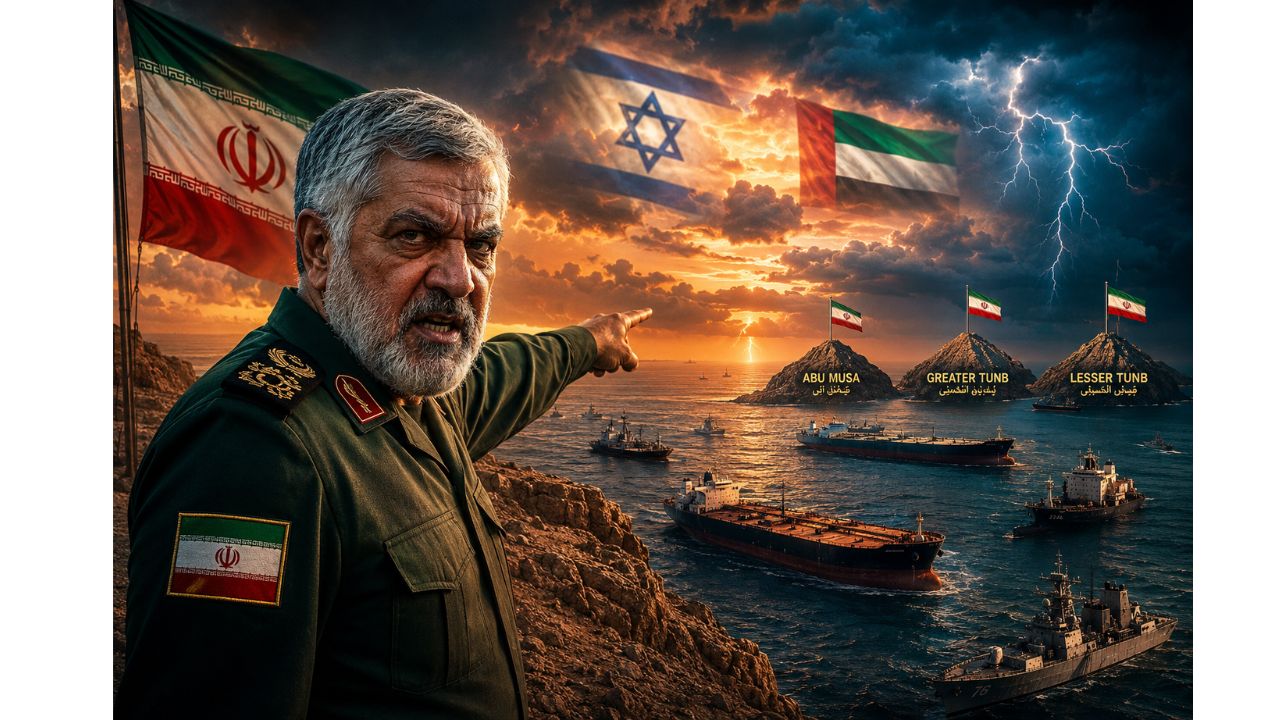
There are also disputes over islands such as:
- Abu Musa
- Greater Tunb
- Lesser Tunb
The UAE claims these islands belong to it, while Iran controls them militarily.
Because of these tensions, Iran views growing UAE-Israel cooperation as a direct threat.
Reports of Secret Cooperation
Recent media reports suggested:
- Israeli defense systems were deployed in the UAE.
- UAE may have quietly supported operations against Iran.
- Israeli intelligence and defense cooperation expanded secretly.
These reports increased suspicion in Iran.
Netanyahu’s public statement appears to have confirmed many of the rumors Iran already believed.
Iranian officials reportedly warned that they would not forgive countries helping Israel during attacks on Iran.
Why Netanyahu Revealed This Now
Experts believe Netanyahu had several possible reasons for revealing the secret relationship publicly.
1. Sending a Message to Iran
Netanyahu may have wanted Iran to understand that Israel is not isolated and has powerful regional partners.
2. Pressuring Diplomatic Talks
At the time of the announcement, diplomatic negotiations involving the U.S. and Iran were reportedly ongoing. Netanyahu may have wanted to remind everyone that Israel remains a key player in regional security matters.
3. Domestic Politics
Netanyahu also faces political pressure inside Israel. Strong national security messaging often strengthens his image among supporters.
UAE’s Biggest Fear
The UAE fears being isolated by the wider Muslim world.
Although the UAE normalized relations with Israel, many Arab populations still oppose Israel because of the Palestine issue.
If the UAE is openly seen helping Israel militarily:
- Regional criticism may increase.
- Iran could become more aggressive.
- Gulf unity could weaken.
- Economic stability could suffer.
That is why UAE officials are carefully trying to balance diplomacy with security partnerships.
Conclusion
The Netanyahu-UAE controversy highlights the complex and secretive nature of Middle Eastern geopolitics.
While countries publicly talk about diplomacy and peace, hidden military cooperation and strategic alliances continue behind the scenes.
The situation also shows:
- The growing partnership between UAE and Israel.
- Iran’s increasing suspicion of Gulf countries.
- America’s influence in regional politics.
- The importance of trade, energy, and security in the Gulf.
As tensions continue, the Middle East remains one of the most sensitive and strategically important regions in the world.