

Global Crisis Is Affecting Everyday Life
The impact of the Iran war is now clearly visible across the world, including in India. Prices of essential goods are rising, inflation is increasing, and global markets are facing uncertainty because of growing tensions in the Middle East.
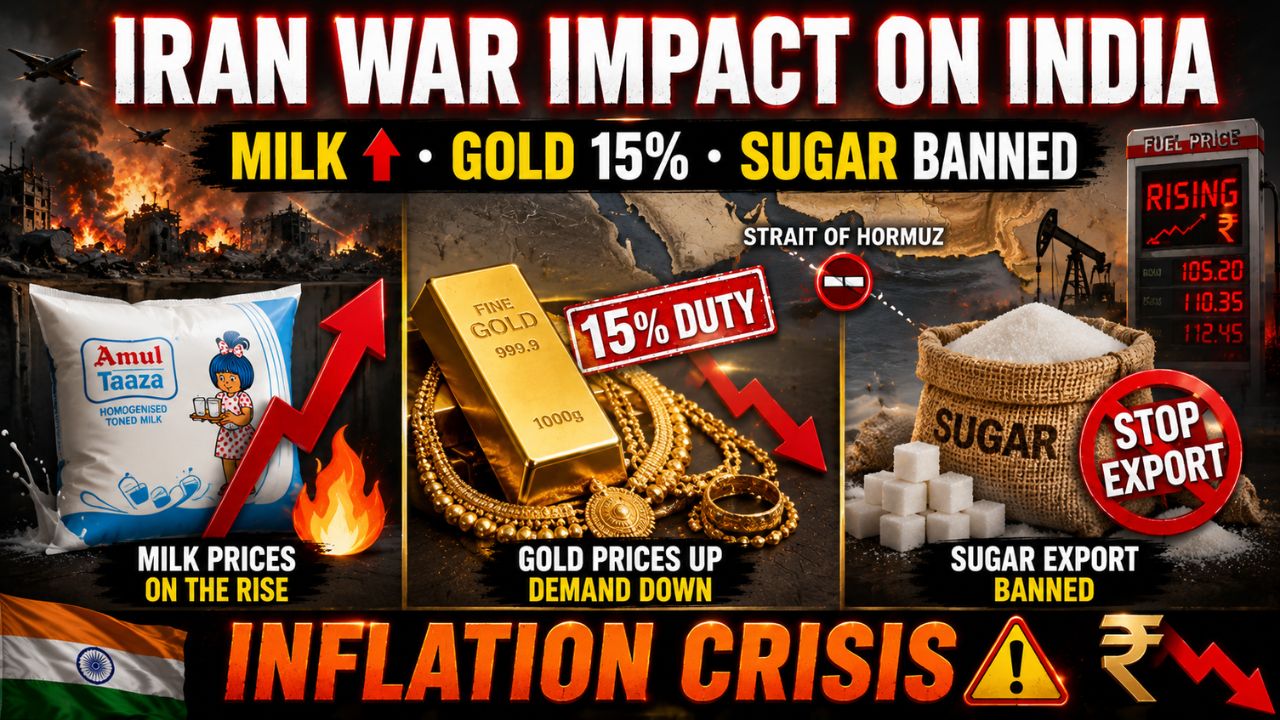
Recently, both Amul and Mother Dairy increased milk prices by ₹2 per litre after 13 months. Experts believe that products like milk, bread, and other daily-use items may continue becoming more expensive if global oil prices keep rising.
The biggest reason behind this situation is the disruption in the Strait of Hormuz, one of the world’s most important oil trade routes.
Why the Iran War Is Different
Unlike many previous conflicts, the Iran war is directly affecting global energy markets. A large amount of the world’s oil supply passes through the Strait of Hormuz. Because of blockades and rising tensions in the region, oil transportation has become risky and expensive.
This has increased fuel prices globally, which directly impacts transportation, manufacturing, and food production costs.
Milk, Gold, and Sugar Prices Rising
India is already taking several economic measures to control inflation.
Milk Prices Increased
Amul and Mother Dairy have increased milk prices due to higher transportation and production costs caused by rising fuel prices.
Gold Import Duty Increased
The government has increased import duty on:
| Item | Duty Increase |
|---|---|
| Gold | 15% |
| Silver | 6% |
This step was taken to reduce India’s trade deficit, which means the country is importing more goods than it exports.
Prime Minister Narendra Modi has also advised citizens to reduce unnecessary gold purchases during this period.
Sugar Export Temporarily Stopped
India has also stopped sugar exports until September to prevent domestic sugar prices from rising sharply.
The government fears that increasing global demand could make sugar expensive inside India as well.
Inflation and Rupee Under Pressure
India’s wholesale inflation has reached 8.3%, mainly because of rising oil prices. Manufacturing industries and factories are facing higher raw material and transportation costs.
At the same time, the Indian rupee has weakened significantly and recently touched around ₹95.76 against the US dollar.
Experts believe that if crude oil prices rise toward $150 per barrel, the rupee could move even closer to ₹100 per dollar.
Is India Strong Enough to Handle This?
Despite these challenges, global rating agencies like S&P believe India’s economy is still relatively strong.
India currently has:
- Strong foreign exchange reserves
- Strategic oil reserves
- Growing domestic demand
- Better long-term growth potential
Although foreign investors have pulled some money out of Indian markets, experts still believe India remains one of the strongest growing economies globally.
What Can Citizens Do?
Experts believe that small actions by citizens can help reduce economic pressure.
Suggested Steps
- Use public transport more often
- Reduce unnecessary travel
- Work from home when possible
- Prefer electric vehicles
- Reduce non-essential imports
If millions of people follow small fuel-saving habits, the overall impact can be significant.
A Major Test for the Indian Economy
The coming months may be difficult for the global economy. If the Iran war becomes more intense, inflation and oil prices may rise even further.
However, this situation is also an opportunity for India to prove the strength of its economy. If India successfully handles this crisis, global investors may gain even more confidence in the country’s economic future.
Final Thoughts
The Iran war is now affecting economies across the world. Rising fuel prices, inflation, expensive imports, and pressure on the rupee are all signs of this growing crisis.
India is facing a challenging period, but strong economic reserves and careful planning may help the country manage the situation better than many other nations. The next few months will be very important for India’s economy and its future growth.