

Heatwave Situation Worsens Across India
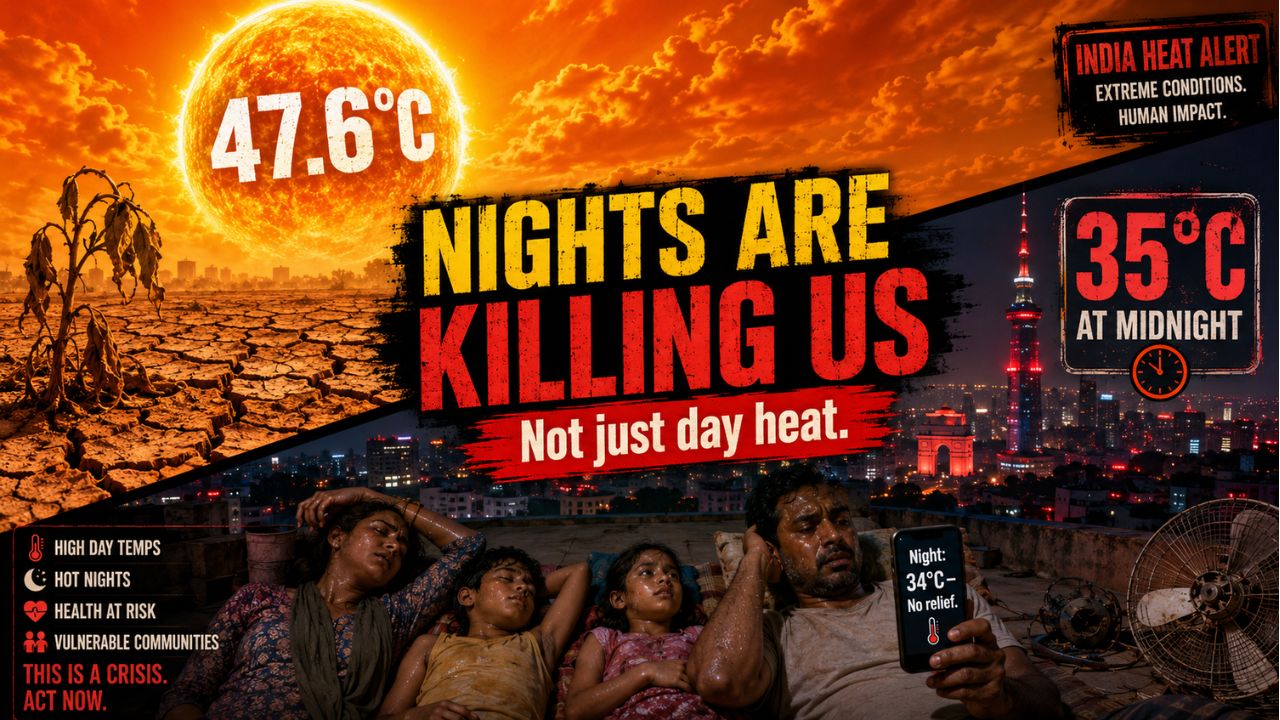
Heatwaves are at their peak in India, and many areas are currently experiencing intense heat waves. Severe heatwaves occur where temperatures are reaching extremely dangerous levels. The news is reporting temperatures as high as 47.6°C, which is a concern for health and the economy.
Cities like Delhi, Jaipur, Lucknow, Ahmedabad, and Nagpur witness 40°C regularly. In Uttar Pradesh’s Banda district, the temperature crossed 47°C for two consecutive days, making it the hottest region in India. .But the biggest concern is not only the daytime heat anymore. Scientists and weather experts are warning of something bigger and more dangerous – extremely warm nights.
What Exactly Is a Heatwave?
A heatwave is not just “hot weather.” Scientifically, it refers to a situation where temperatures remain significantly higher than normal for several days continuously. According to the India Meteorological Department (IMD):
- In plains, temperatures above 40°C can qualify as a heatwave.
- In coastal areas, the threshold is 37°C.
- In hilly regions, it is around 30°C.
When temperatures rise much beyond these limits, it becomes a severe heatwave. Today, experts also consider additional factors like:
- Humidity
- Duration of heat
- Night-time temperatures
- Wet bulb temperature
- Human survivability
- Urban heat retention
This means heatwaves are now measured not only by daytime temperature but by their total impact on human life.
Why This Year’s Heatwave Feels More Dangerous
1. Warm Nights Are Becoming a Major Threat
Historically, even after extremely hot days, nights used to become cooler. This allowed the human body to recover from heat stress. But now, nights are staying abnormally warm. This is extremely dangerous because:
- The body cannot cool itself properly
- Sleep quality gets affected
- Dehydration continues throughout the night
- Heart rate remains stressed
- Internal cooling mechanisms fail
Scientists call this “cumulative heat stress.” Research shows that hotter nights increase the risk of:
- Heart attacks
- Heat strokes
- Kidney damage
- Elderly deaths
- Mental stress
Poor and working-class populations suffer the most because many families do not have access to air conditioners or even coolers.
2. Lack of Western Disturbances
One immediate reason behind the current heatwave is the weak presence of Western Disturbances. Normally, these weather systems travel from the Mediterranean region through Iran, Afghanistan, and Pakistan into North India. They bring:
- Clouds
- Thunderstorms
- Light rainfall
- Temporary cooling
This year, those systems have remained weak, reducing pre-monsoon rainfall and relief.
3. High Pressure Systems Are Trapping Heat
Another major reason is the dominance of high-pressure systems over North India. In a high-pressure system:
- Air sinks downward
- Clouds struggle to form
- Rainfall becomes limited
- Heat gets trapped near the surface
Because there are fewer clouds:
- Direct sunlight reaches the ground
- Land absorbs more heat
- Temperatures keep increasing day after day
This creates continuous heating with almost no relief.
El Niño Could Make Things Worse
Weather experts are also worried about the possible return of El Niño conditions. Normally, Pacific Ocean trade winds help maintain global weather balance and support the Indian monsoon. During El Niño:
- Ocean temperatures shift abnormally
- Monsoon systems weaken
- Rainfall reduces
- Heat increases across Asia
Although El Niño conditions are currently neutral, scientists fear a strong El Niño may develop later, which could weaken India’s monsoon even further. If rainfall decreases, the heatwave situation could become much more severe.
Why Rainfall Is So Important
Rainfall cools the Earth in two important ways:
1. Cloud Cover Blocks Heat
Clouds reflect part of the Sun’s radiation back into space, preventing direct heating of the land.
2. Wet Soil Creates Cooling
Rainwater keeps soil moist, and moisture released into the air creates evaporative cooling. Without rainfall:
- Land stays dry
- Heat keeps building
- Temperatures remain high both day and night
Urban Heat Island Effect: Why Cities Feel Hotter
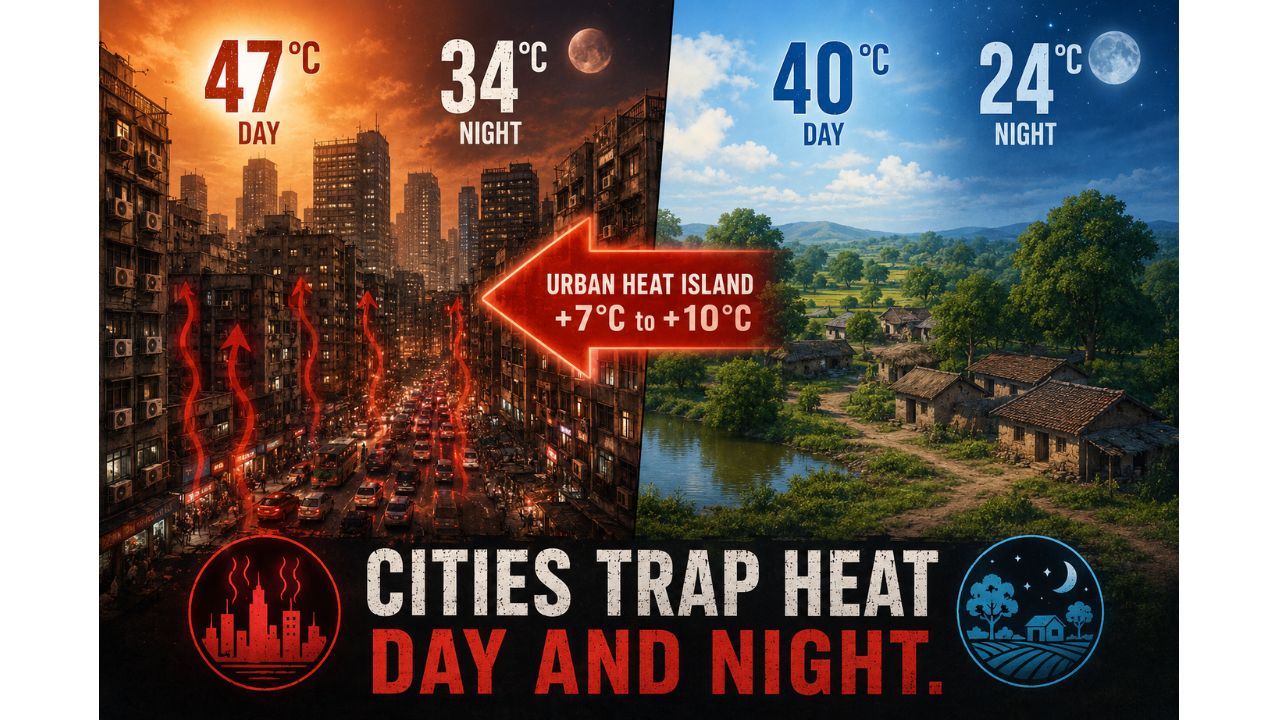
Cities are becoming significantly hotter than nearby rural areas due to the Urban Heat Island Effect. Urban areas contain:
- Concrete buildings
- Asphalt roads
- Steel structures
- Glass surfaces
These materials absorb and store heat during the day and slowly release it at night. As a result:
- Cities remain hot even after sunset
- Wind movement gets blocked by tall buildings
- Trees are reduced
- Air conditioners release additional heat outside
That is why metropolitan cities like Delhi, Mumbai, Kolkata, and Ahmedabad experience unbearable nighttime heat.
Why India Is Highly Vulnerable
India faces a unique combination of risks:
1. Tropical Geography
India lies in a tropical and subtropical region naturally prone to high temperatures.
2. Massive Population
High population density means more people are exposed to dangerous heat.
3. Outdoor Workforce
Millions of Indians work outdoors in:
- Construction
- Farming
- Transport
- Delivery services
Extreme heat directly affects their health and productivity.
4. Poverty and Limited Cooling Access
A large population cannot afford proper cooling systems, increasing mortality risks.
5. Water Stress
Water shortages worsen dehydration and heat-related illnesses.
Economic Impact of Heatwaves
Heatwaves are no longer just environmental issues — they are economic crises. The World Bank has previously warned that by 2030:
- India could lose millions of jobs due to heat stress
- Outdoor labor productivity may sharply decline
- Economic growth could slow down
Workers may not be able to safely work outside for long hours in extreme heat conditions. Agriculture, transportation, construction, and manufacturing sectors may all suffer major losses.
Long-Term Solutions India Needs
Experts believe India must urgently adopt long-term strategies to deal with rising temperatures.
Better Urban Planning
- More trees
- Urban forests
- Green roofs
- Cool roofing systems
Renewable Energy
Reducing fossil fuel dependence can lower greenhouse gas emissions.
Public Health Systems
Governments should:
- Issue heat alerts early
- Build cooling centers
- Improve emergency healthcare response
Climate Policies
India needs stronger climate adaptation policies to reduce future risks.
Final Thoughts
The current heatwave is not just a temporary summer problem. It is a warning sign of a changing climate and growing urban stress. The most alarming part is that nights are no longer providing relief. Continuous exposure to heat is pushing human survivability to dangerous limits.If climate change, urbanization, weak monsoons, and rising temperatures continue together, India may face even bigger heat crises in the future.Heatwaves are no longer rare events. They are becoming the new reality — and India must prepare before the situation becomes even more dangerous.